
The Ugly Duckling: A Gentle Bedtime Story
Teased for looking different from his yellow siblings, a shy grey duckling journeys through the seasons until spring reveals he has been a graceful white swan all along.
8 min readAges 3–7
Written and illustrated with the Story Sprinkle app, then edited by our team.
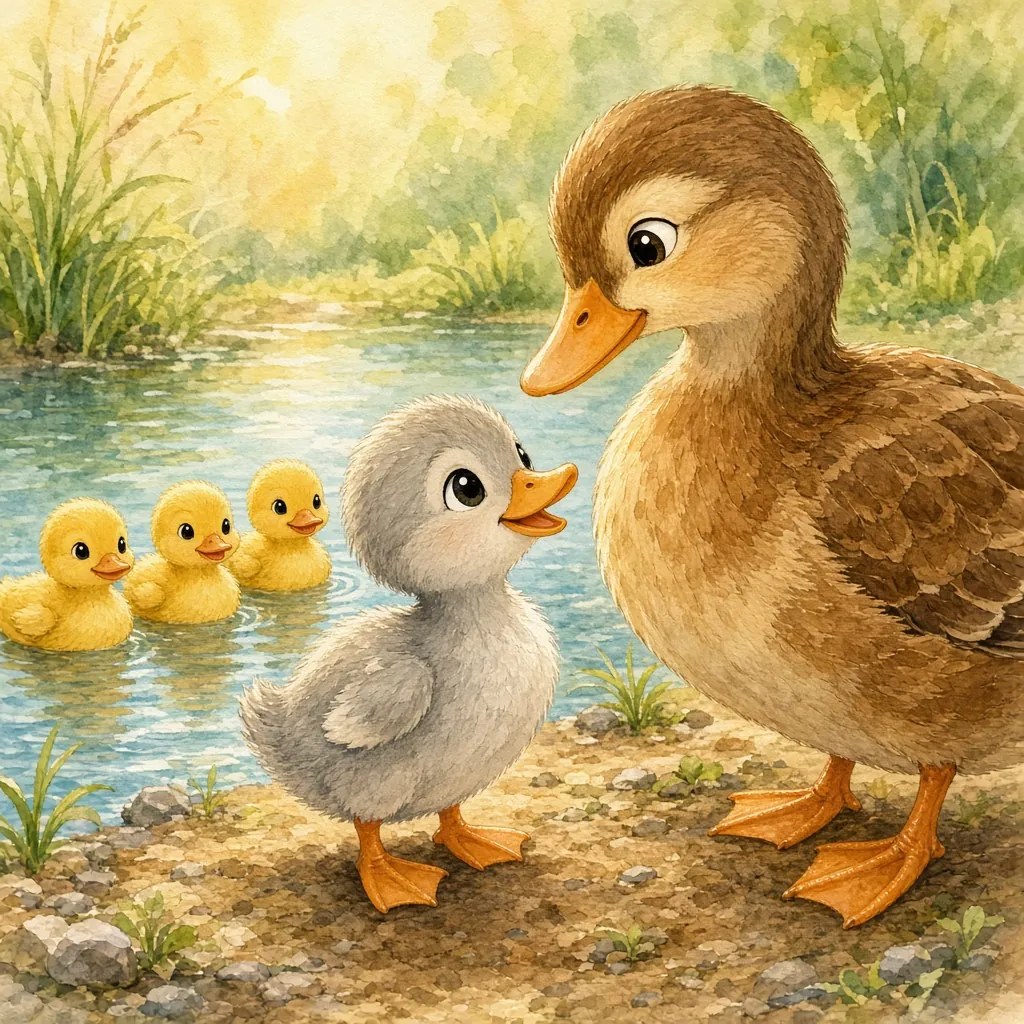
Little Duckling was a small grey duck who lived by a quiet pond. Mama Duck had warm brown feathers. The reeds went hush, hush, hush. One sunny morning the eggs cracked. Pop, pop, pop. Fluffy ducklings tumbled out, bright yellow and very loud. They peeped and wiggled. They all looked the same. Then the last egg opened. Out came Little Duckling. His down was soft grey, like a little cloud. His beak was orange. His feet were orange too. He blinked at the big blue sky. "Hello, little one," said Mama Duck. She tucked him under her warm wing. "You are mine. I love you." The yellow ducklings stared. "You do not look like us," they said. "You are grey. You are odd." Little Duckling looked at his feet. His tummy felt tight. He still wanted to splash and play with them. Mama Duck said, "Different is not bad. Come swim with me." The pond held their faces like a mirror. Yellow faces. One grey face. Little Duckling felt shy, but his feet worked well. He could float. He could make little rings in the water. The pond did not mind his color. Little Duckling stayed close to Mama and listened to the wind in the reeds. He hoped the next day would feel softer and kinder.
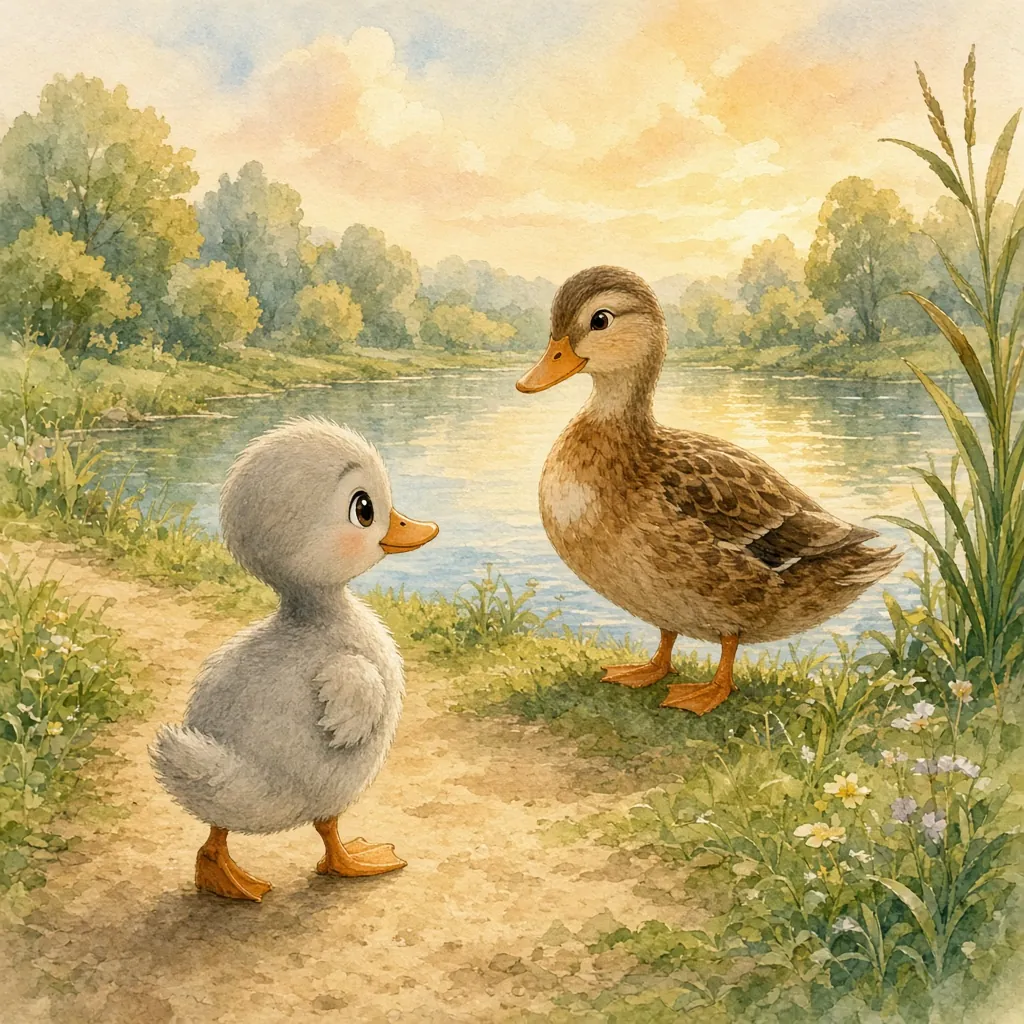
Days passed at the pond. The yellow ducklings played tag in the shallows. They did not wait for Little Duckling. When he came near, they giggled. "Grey bird, grey bird," they sang. It was not a kind song. Little Duckling tried to laugh too. The laugh got stuck. He dipped his beak and made a tiny splash for Mama. She smiled. "You swim strong," she said. "Strong and gentle. That is a good way to be." Still, the giggles followed him like little sticks on the water. He did not want to peck or shout. He only wanted a quiet friend. So one pale afternoon, he told Mama, "I will take a short walk. I will be careful. I will come back when my heart feels big again." Mama Duck touched his cheek with her beak. "Go slowly," she said. "The world is wide, but you are loved." His smallest sister swam close. "I am sorry we sang that song," she peeped. "Please come back." Little Duckling waddled along a soft dirt path. He looked back once. Mama was a brown shape by the shining pond. He lifted one foot, then the other. Step, step, step. A new season was waiting, and he would meet it without hurry. He felt brave in a small, steady way.
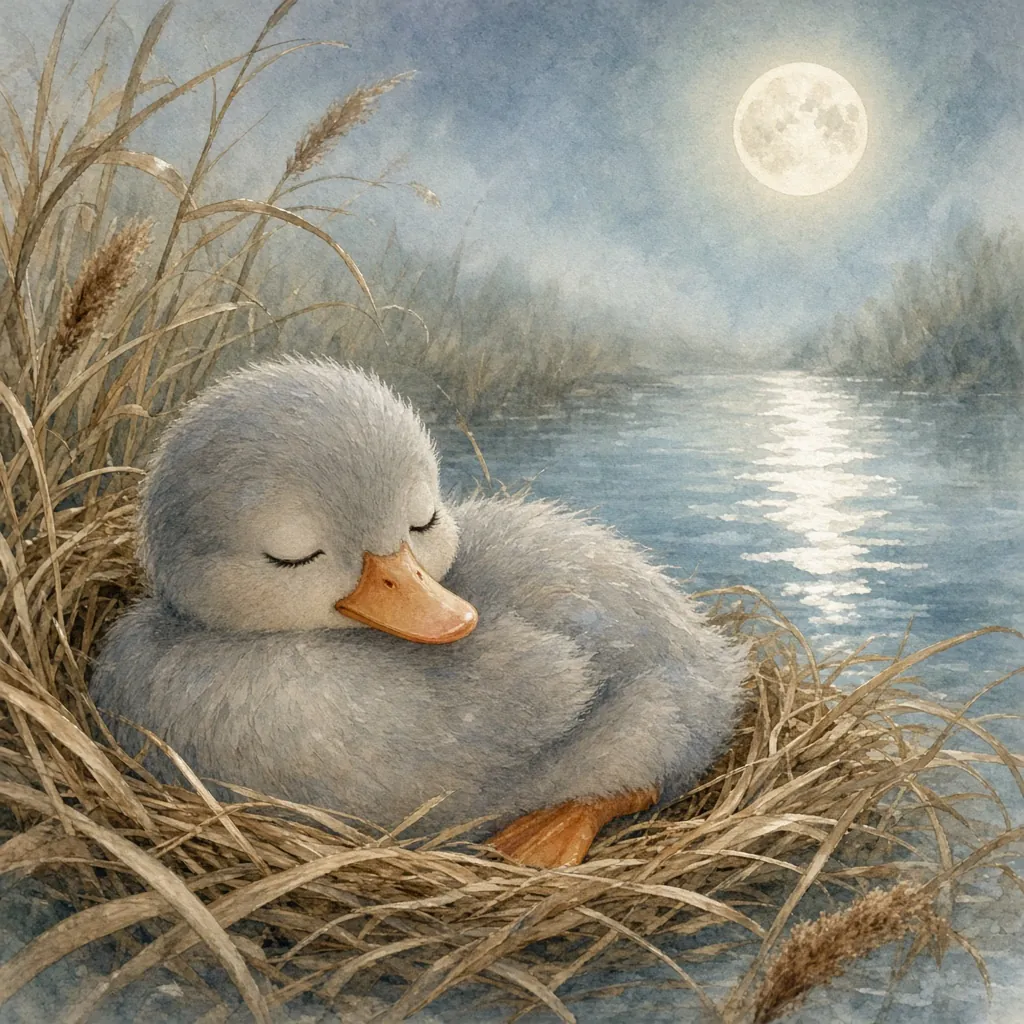
The air turned cool. Leaves became gold, then brown, then quiet. Little Duckling found a bend in a stream where the water moved slow. He ate seeds. He drank. He rested his tired feet. When the sun went down, the sky turned deep blue. A round moon rose. It spilled silver light on the water. This was a soft night, not a scary one. The wind was only a whisper. Little Duckling tucked himself into a nest of dry reeds. He could see the moon in the stream. It looked like a white bowl. "Hello, moon," he peeped. His voice was small, but the night did not laugh. He thought of Mama Duck and the yellow ducklings. He missed warm wings. He did not miss the unkind song. He told himself, "I can be alone and still be safe. I can be different and still be good." Crickets sang a slow song. It sounded like a lullaby. It did not ask him to be yellow. It only asked him to rest. A silver fish made one gentle ring and went back to sleep. Little Duckling slept until the moon slid low, full of quiet hope.
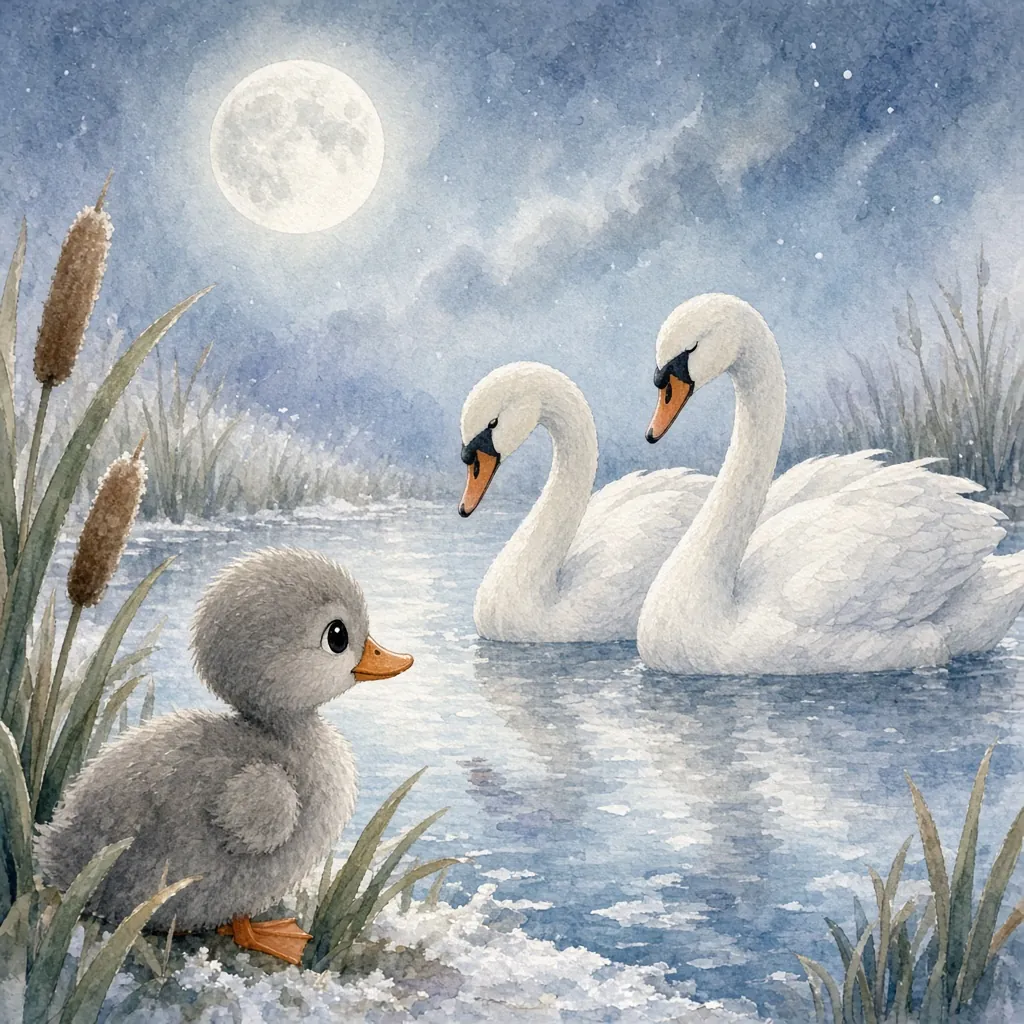
Winter came with soft snow, not a storm. The stream wore a thin glass of ice at the edges. Little Duckling found open water and a snowy bank. He shook his feathers and stayed near the light of the moon. One clear night, great white birds flew over the trees. Their wings made a low, calm whoosh. They were swans. They landed far off, tall and bright in the moonlight. They did not tease. They folded their wings and rested. Little Duckling hid in the reeds and watched. His heart thumped, but not from fear. From wonder. "They are beautiful," he whispered. "I wish I could be near them. I wish I were not grey and small." A swan turned its long neck. It did not chase him. It only looked gentle, then tucked its head to sleep. The snow sparkled like tiny stars. Little Duckling's breath made a little cloud. He remembered Mama's words. Different is not bad. He said them again, slow and soft. Then he settled down to wait for spring. Something in him was growing. He did not know its name yet. He only knew he should be patient.
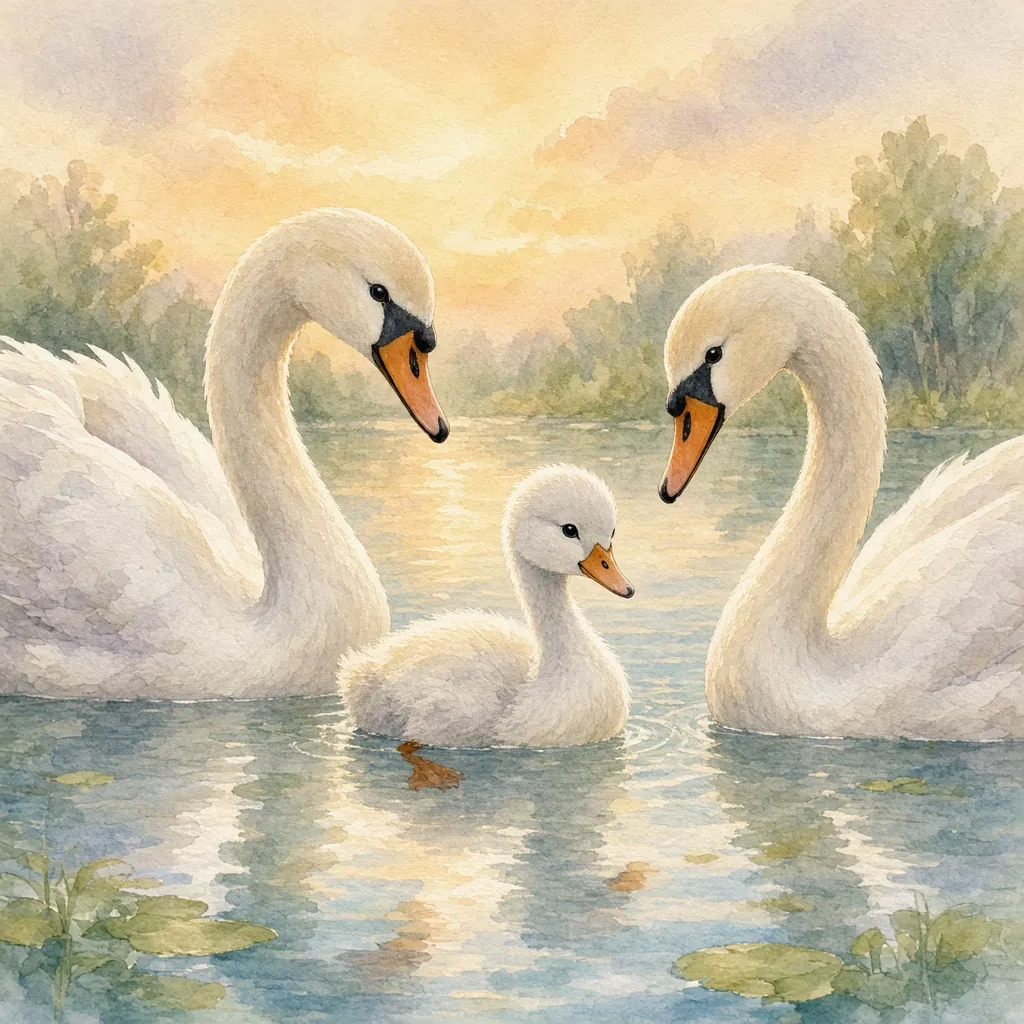
Spring came with green tips and a warm smell. The ice melted. Flowers opened. Little Duckling stretched. His body felt longer. His wings felt strong. He walked to the clear pond and looked down. A white bird looked back. The neck was long and lovely. The feathers were bright as the moon he had loved all winter. Little Duckling blinked. He turned. The bird turned too. It was him. "Oh," he said, very quiet. "I was growing. I was a swan all along." The white swans came near. They did not laugh. They made a soft circle in the water. "Swim with us," said one. "You belong." Little Duckling slid into the pond. The water held him kindly. He was no longer the grey odd one. He was shining, and he was still himself. He had promised to come back, so he flew home to the quiet pond. Mama Duck knew him at once. "You are still mine, and I love you," she said. His brothers and sisters swam close to say hello. He did not rush. He did not boast. He floated, then rested when evening painted the sky pale gold. Being different had never been a mistake. It had been a beginning. Everyone grows in their own time, and what makes you seem different today may be your greatest beauty tomorrow. Little Duckling closed his eyes, peaceful, and the pond grew still.
The moral
Everyone grows in their own time, and what makes you seem different today may be your greatest beauty tomorrow.
Where this story comes from
Written as an original literary fairy tale by Danish author Hans Christian Andersen and first published in Copenhagen in 1843 in his collection New Fairy Tales.